Jāye Shoma Khāli (2026)
In June 2026, I was invited to participate in a public-facing open studio at 8cube in Tehran. āye Shoma Khāli is a self-portrait that began as a dialogue with my past selves. In June 2026, I was invited by Amin Davaei to participate in a public-facing open studio where each artist would create a self-portrait in their medium of work. The intention was to create space for artists to work while the audience engaged with them and their materials throughout the week.
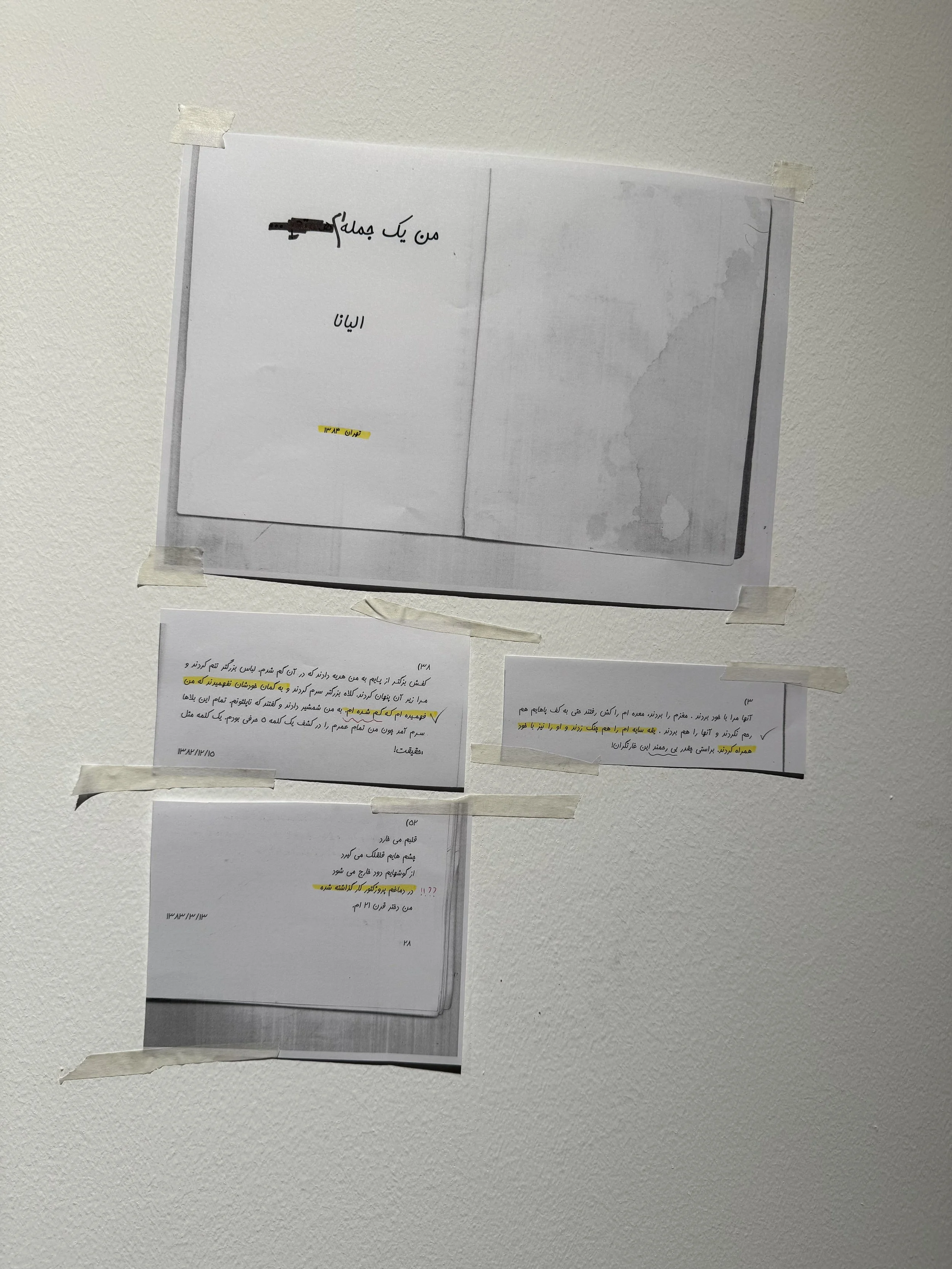
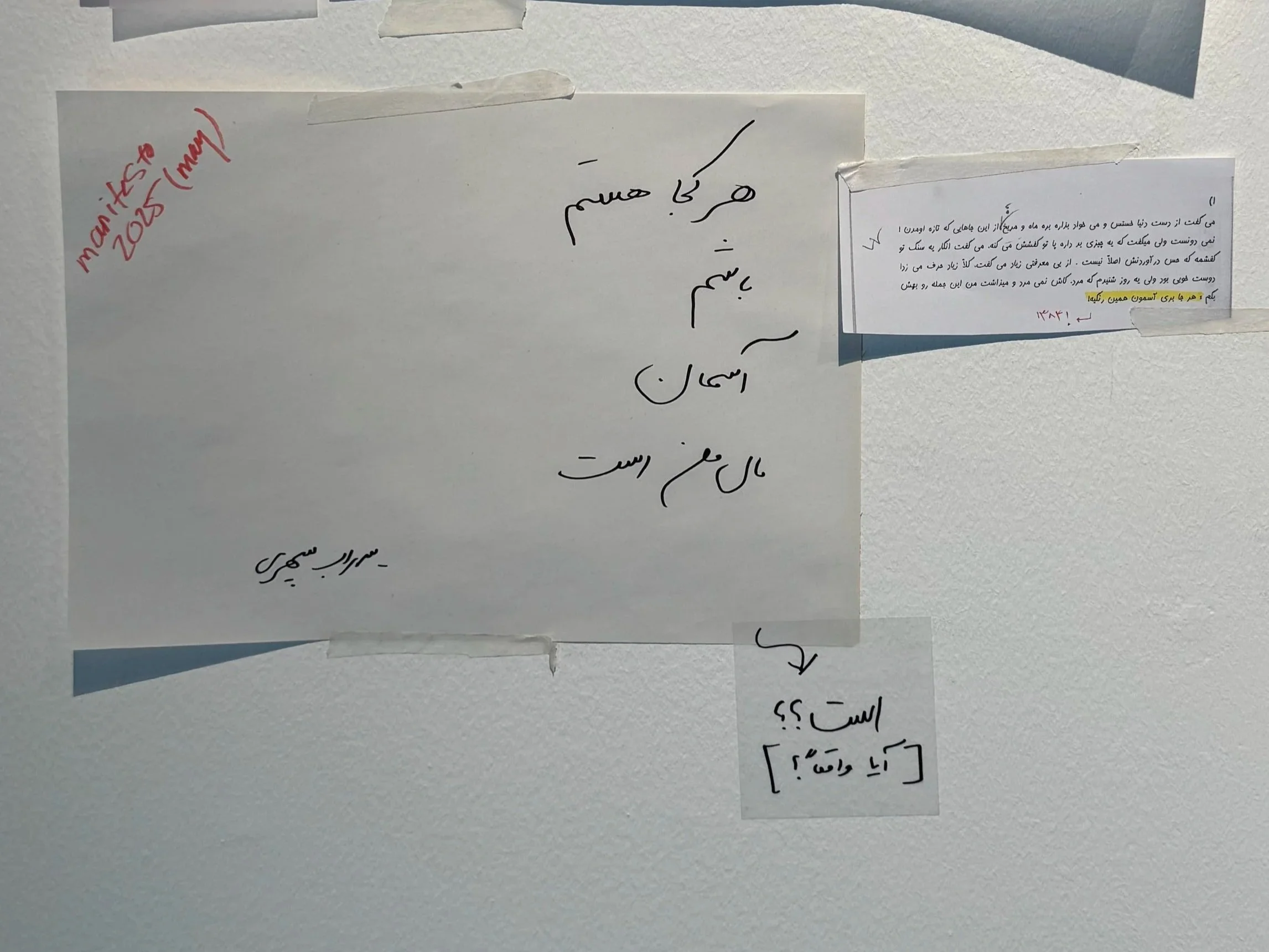
After twenty years abroad, I returned to Iran in June 2025. The year that followed, beyond the incomprehensible pain and challenges that it had for Iranians, was also full of questions about the absences and the emptiness it had carried. My self portrait, a self-dialogue, which resulted in this interactive piece, began with rereading the writings of fifteen-year-old Elyana — in the collection “I Am a Sentence,” a diary, and a notebook of beliefs (which seems to have only been a thing in the Iranian girl schools), followed by the digital collages of the past decade, each an unconscious self-portrait from a different moment in my life. By reviewing these pieces and conversing with them, I was looking for a connecting thread in my life.
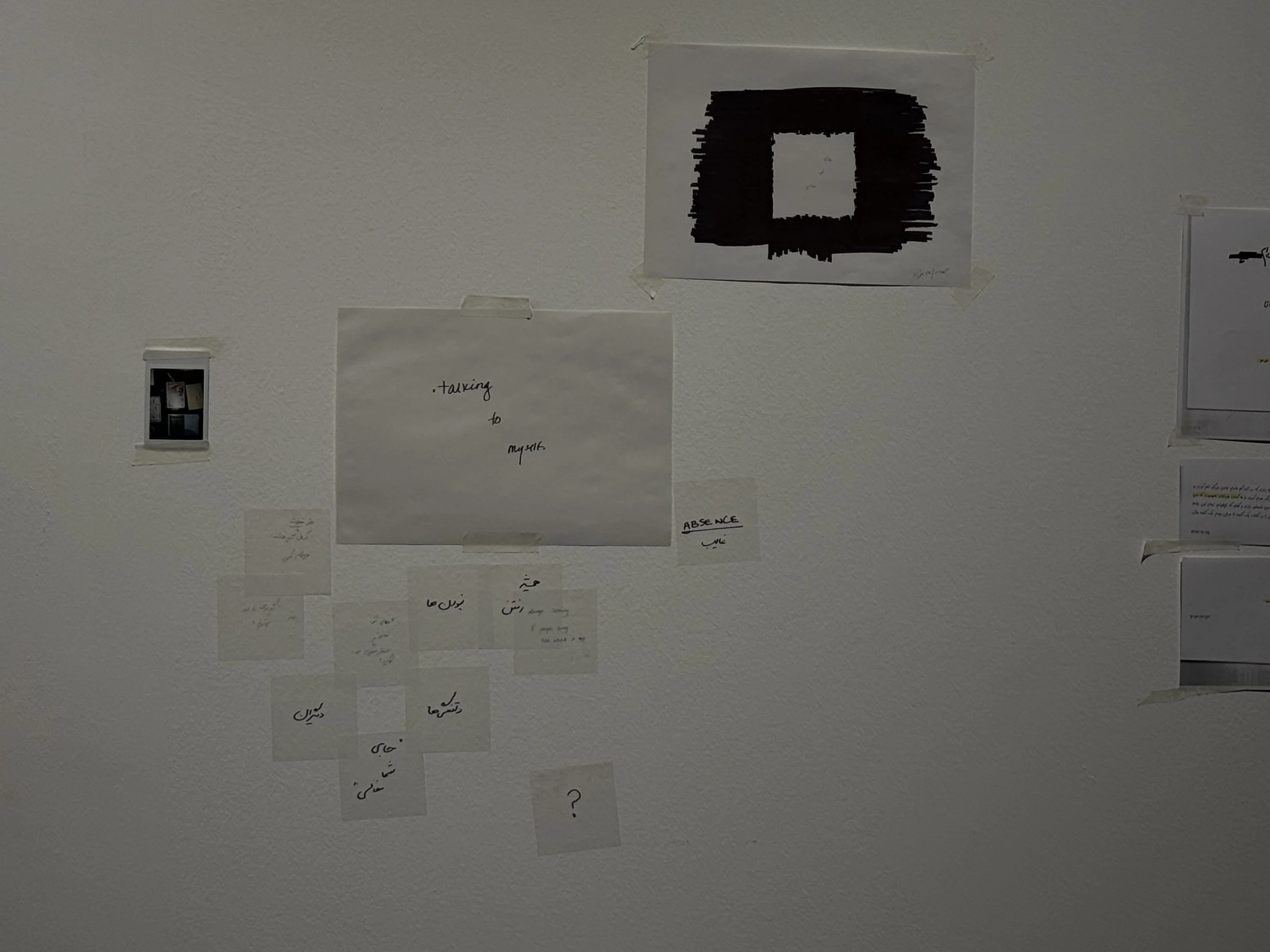
Across all of this work, absences, departures, and the presence of others kept surfacing, and it all settled into the phrase “جای شما خالی.” This phrase doesn’t have a direct translation in English, but it aims at the empty space of a person who is absent. For me, this empty space never gets filled. It never fades. In Farsi, the phrase holds no fixed tense — past, present, or future.
Absence seems to have been a big part of my life - be it the absence of others in my life or mine in theirs, and during the week, I was curious about how to translate the untranslatable into a physical spatial experience, giving it form and a language without barriers. Jāye Shoma Khāli is my self-portrait today, looking back at a past largely made of not-being-there.
In this experience, the visitor is invited to sit in the empty chair and see their live image on the screen across from them. Someone’s place beside you is empty. And somewhere, your place beside someone is empty too.
Medium: Archival photos, Procreate, TouchDesigner, Webcam
Curator: Amin Davaei
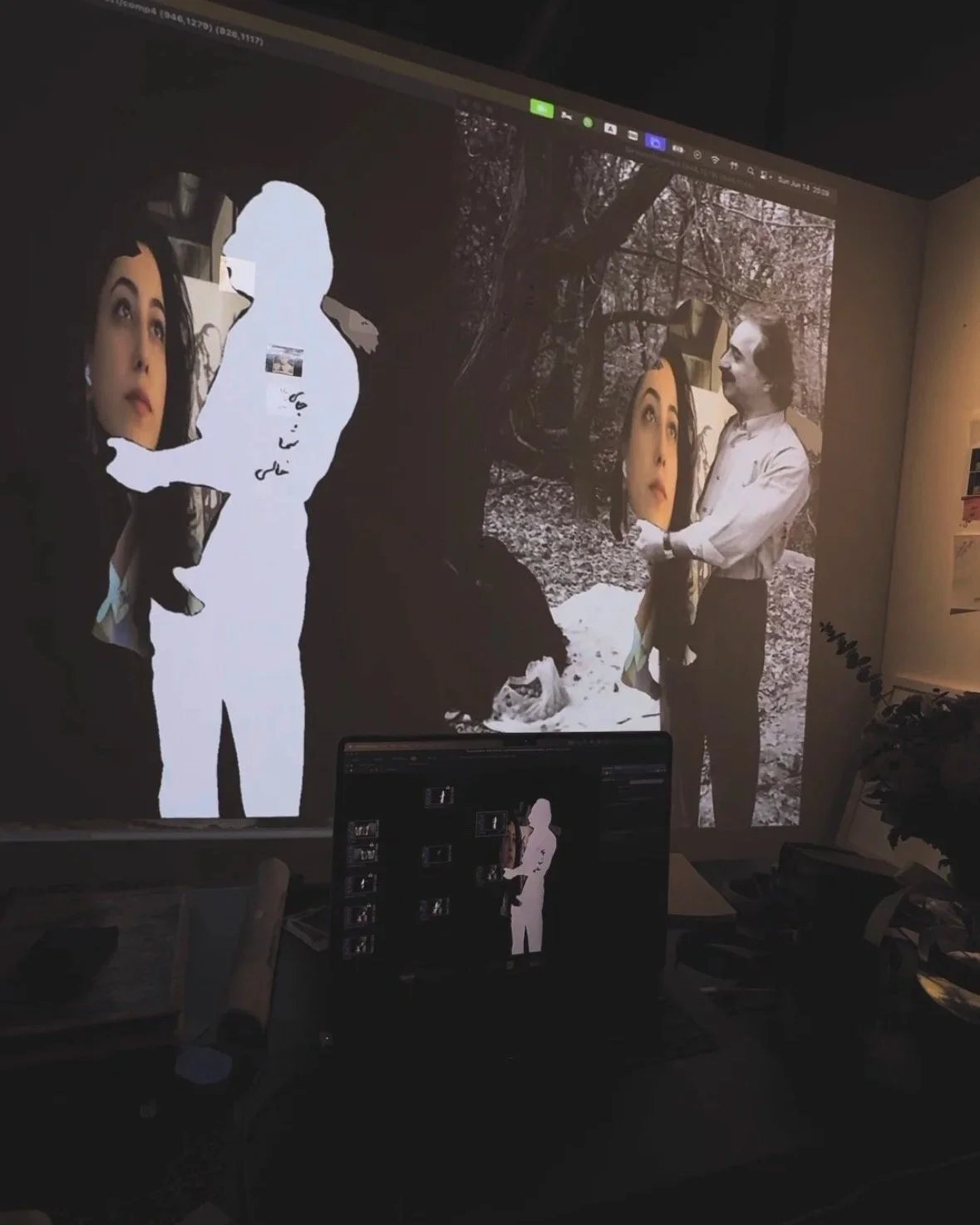
TouchDesigner study: how to use live imagery and archival photo to collage a moment?
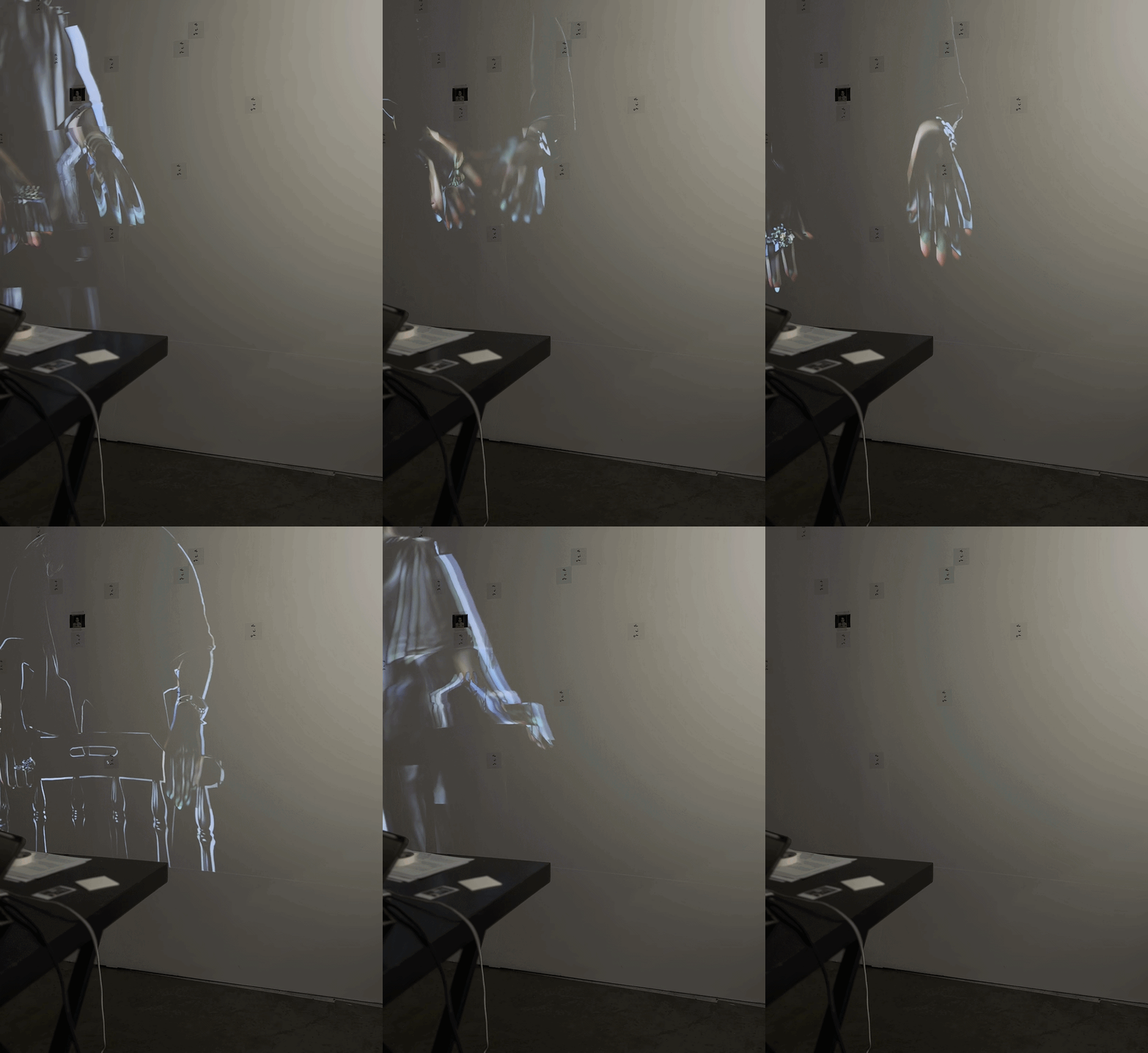
TouchDesigner study: how to translate a phrase that doesn’t translate into a universal language? how to showcase a time passing, something that’s ephemeral, yet you know was there at some point
The research began with an archival process of looking into past written work, as well as diaries, friend’s notes, and digital collages that through the time began to feel like a similar language: the absence.